
BNB Ascending Channel: The Pressure Cooker Pattern Building a Surprise Breakout
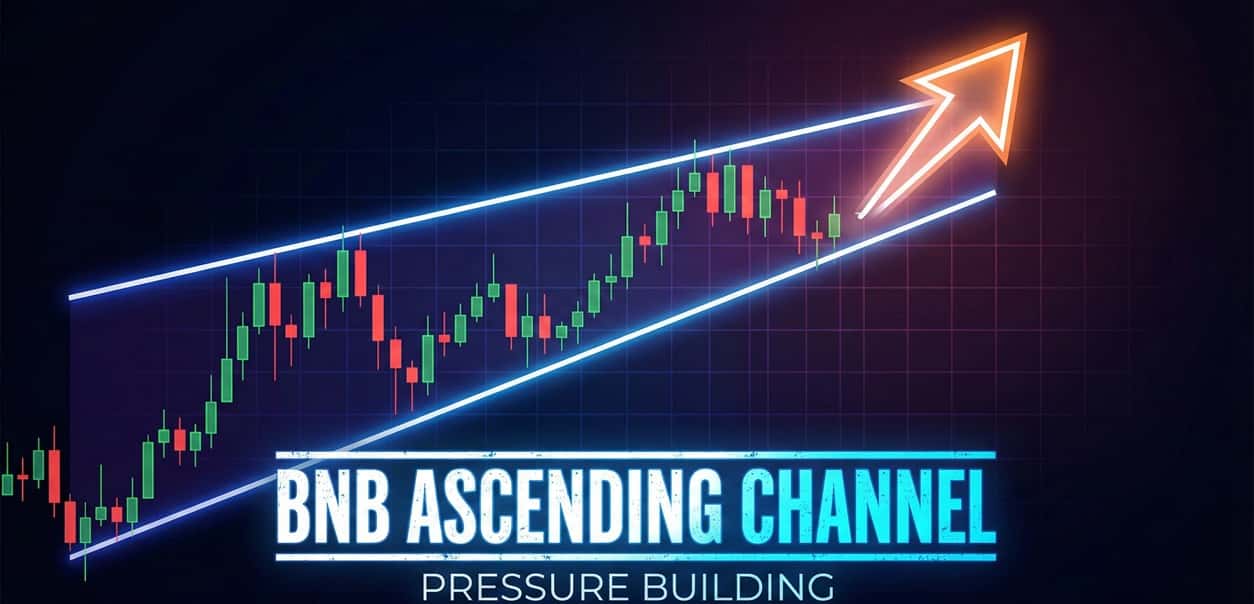
BNB Ascending Channel BNB is pushing higher inside a rising channel, and the move is getting tighter by the day. Candles keep printing higher lows near the upper boundary, which is exactly how markets “load up” before a decisive expansion. When buyers defend dips repeatedly while price refuses to drift back to mid-channel, it’s a clue: demand is confident, and supply is being absorbed. That’s why the BNB Ascending Channel deserves attention right now.
Stay bullish while higher lows and channel support hold. Flip cautious the moment price gets sharply rejected and then breaks below the lower rail. The BNB Ascending Channel offers opportunity and a clear line in the sand.
Why Rising Channels Attract Momentum Traders
An ascending channel is a trending range: price bounces between a rising support line and a rising resistance line. The magic is not the lines—it’s the behavior. Each pullback is bought sooner, creating higher lows. Each rally meets supply at a predictable area. Over time, volatility compresses and the market approaches a trigger point.
In a healthy BNB Ascending Channel, pullbacks are controlled, bearish candles lack follow-through, and closes stay above the rising support. That tells you sellers are present, but they’re not dominant. The market isn’t dumping; it’s consolidating within trend.
Tightening Near the Top Is a Bullish Tell
Many traders assume the upper boundary is a place to short. Sometimes it is. But when price keeps hovering near the top rail while still forming higher lows, that’s often strength, not weakness. It means buyers are willing to hold risk at higher prices instead of taking profits and letting price fall.
The current BNB Ascending Channel is showing that “hold-high” behavior. If price breaks above the upper boundary and holds it, the channel can shift from a guided climb into an acceleration phase. That’s where breakouts become fast, because everyone is watching the same ceiling.
What Momentum Looks Like Without Indicators
Momentum building doesn’t always mean green candles. It can look like smaller pullbacks, faster dip buying, and repeated closes near resistance. When sellers push down and buyers immediately reclaim, you’re seeing absorption. When that happens multiple times, a breakout becomes more likely because supply is being consumed.
In the BNB Ascending Channel, the key detail is the sequence of higher lows into resistance. That pattern squeezes shorts, tempts breakout traders, and forces sellers to defend the same zone again and again. Eventually, one side gives way.
The Only Levels That Matter
You only need three levels: rising channel support (the lower rail), upper channel resistance (the top rail), and the most recent higher low that defines the micro-structure. As long as price respects those, the BNB Ascending Channel remains a bullish continuation framework.
Lower rail: the “permission” level for bulls. If it holds, dips can be bought with structure.
Upper rail: the “trigger” area. A clean break and hold can unleash trend continuation.
Recent higher low: the short-term support that tells you whether buyers are still stepping in early.
The Bull Case: Continuation While Higher Lows Hold
The bullish thesis is not “BNB must pump.” The bullish thesis is “the trend remains intact until it breaks.” In a BNB Ascending Channel, higher lows are the backbone. If that sequence remains unbroken, the probability favors continuation.
A clean continuation usually appears in one of two ways. First, a breakout above the upper rail with strong candle bodies, then a retest that holds. Second, a grind along the top boundary that finally pushes through as volatility collapses. Both can work, but the breakout-and-retest is typically easier to manage.
The Bear Case: When a Rejection Turns Into Real Damage
The warning in your setup is the right one: a sharp rejection followed by a break below channel support invalidates the bullish continuation. A rejection alone can be normal profit-taking. The decisive event is losing the lower rail, because that signals demand is no longer defending the trendline.
If the BNB Ascending Channel breaks down, the psychology often flips quickly. Buyers who used the lower rail as “safe support” get stopped out. Late longs exit. Shorts gain confidence on failed structure. That’s why breakdowns can accelerate after a clean support breach.
How to Trade the Structure Without Overtrading
The biggest mistake in channels is trading every wiggle. Instead, trade around confirmation and invalidation. If you want a conservative entry, wait for a confirmed break above the upper rail, then look for price to hold above it on a retest. This reduces the risk of buying a wick.
If you prefer a support entry, the logic is straightforward: buy near rising channel support, keep risk tight, and exit if price closes below the lower rail. Either way, keep size reasonable—tight consolidations can whip both sides.
Volume: The Proof Behind the Move
Volume is not decoration; it’s evidence. A breakout from the BNB Ascending Channel is more believable when volume expands as price clears resistance. Low-volume breaks are prone to snap back into the channel, trapping late buyers.
On the downside, a break below channel support with rising sell volume is a strong invalidation signal. It suggests distribution, not a harmless dip. If volume confirms the breakdown, respect it.
Fakeouts: The Trap That Burns Impatient Breakout Buyers
Not every pop above resistance is real. In the BNB Ascending Channel, false breakouts often happen when price wicks above the upper rail and immediately closes back inside the range. If that push comes with weak volume and no follow-through, treat it as a warning, not a signal. The best BNB Ascending Channel breaks usually hold the level, then grind higher.
A Minimal Trade Plan You Can Execute
Bullish plan: wait for a close above the upper boundary, watch for follow-through, and consider entry on a successful retest. Place invalidation just back inside the channel or below the retest low, depending on your style. Take partial profits into the first impulsive expansion and trail the rest under higher lows.
Support plan: enter near the lower rail only if price shows buyers stepping in (quick reclaim, strong close, or shrinking sell candles). Invalidate on a decisive close below channel support.
Both plans revolve around the same idea: the BNB Ascending Channel gives you a map. Use it to avoid guessing.
What to Watch Next
Watch whether price continues hugging the upper boundary while printing higher lows. If you get a sudden rejection, immediately monitor the lower rail. A hold keeps the bullish thesis alive. A break shifts the game.
Also watch dip-buy speed. Strong trends buy dips quickly. Weak trends bounce slowly and roll over again. Those changes appear before the crowd notices.
Bottom Line
BNB is pressing higher inside a tightening rising channel, and the bias stays bullish while higher lows and channel support hold. The BNB Ascending Channel is attractive because it offers both a continuation trigger at the upper rail and a clear invalidation below support. If buyers break and hold above resistance, continuation can accelerate. If a rejection leads to a clean break below support, step back and reassess—because the structure has failed.