XRP real world assets: Is This the Moment Institutions Finally Take Crypto Seriously?
A $150M Breakthrough for Tokenized Treasuries
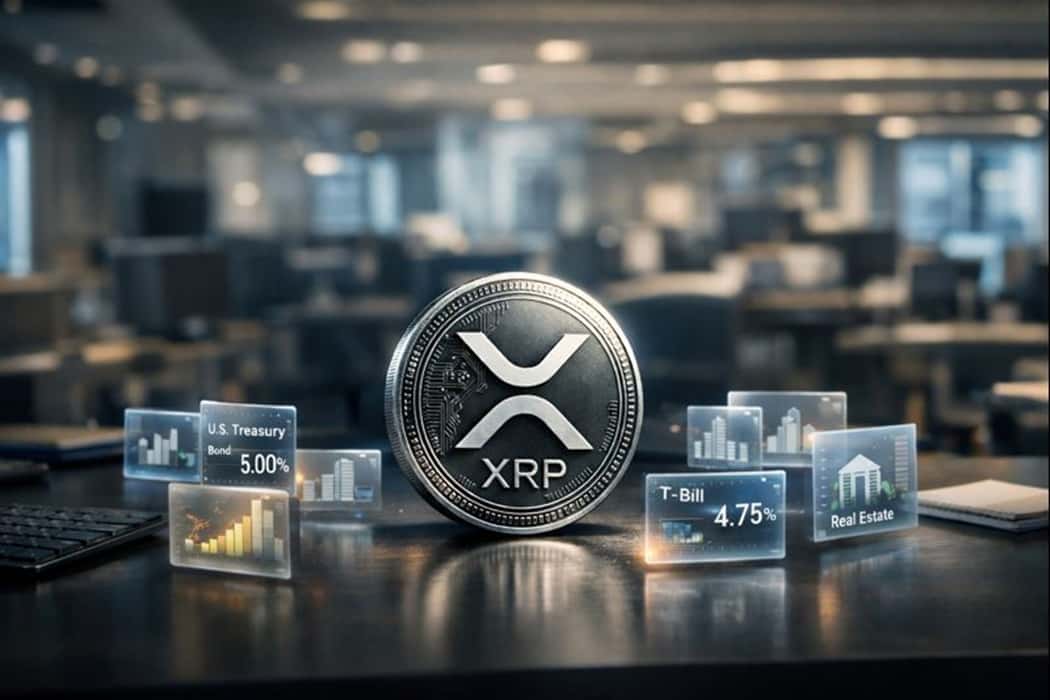
XRP real world assets are quietly turning the XRP Ledger into an institutional-grade finance venue, not just a payments rail.
Over $150M in tokenized U.S. Treasury debt now sits on-chain, pushing funds, fintechs, and banks to pay attention.
Backed by short-term government debt that markets already trust, XRP real world assets lower the psychological barrier for conservative institutions.
They prove this technology can carry core portfolio assets, not only serve speculative trading.
From Fast Payments to Full-Spectrum Finance
For years, the ecosystem was mostly seen as a cross-border payments rail.
Now XRP real world assets are expanding that story into a base layer where tokenized bonds and other fixed-income products sit alongside native crypto.
On-chain treasuries as XRP real world assets become programmable “money legos” for wallets, protocols, and trading systems, with settlements in minutes instead of days.
This shift turns the ledger into deeper financial infrastructure quietly powering apps and services that users may not even realize run on blockchain.
Why Institutions Care About This Shift
Institutional desks are not easily impressed by buzzwords, but they do care about yield, collateral quality, and operational efficiency.
XRP real world assets tick all three boxes when structured correctly: the underlying is familiar, the settlement is near-instant, and the ledger gives transparent tracking of flows and holdings.
For asset managers, having part of their portfolio in these tokens means they can move collateral, pledge it, or rebalance positions without waiting days for wires to clear.
They can also integrate these positions into existing risk systems, because from a fundamental perspective the exposure is still to U.S. Treasuries rather than some exotic, untested asset.
That blend of old and new is exactly what many institutions have been waiting for: incremental innovation, not a full leap into the unknown.
The Platforms Pushing Adoption Forward
This transition is being driven by specialized issuers and platforms that focus on making XRP real world assets usable in the real world, not just on paper.
Names like OpenEden, Ondo Finance, and Zeconomy are building compliant vehicles that hold treasuries off-chain while minting corresponding tokens on the ledger.
Because these tokens are structured this way, they can be integrated into DeFi-style products, market-making strategies, and institutional custody solutions.
Each new platform that joins the ecosystem adds more liquidity, more counterparties, and more reasons for others to plug in as well.
Over time, this clustering effect can turn the ledger into a natural meeting point for institutions that want to access tokenized yield products without reinventing their entire tech stack.
Tokenized Treasuries as Building Blocks
Among all possible instruments, treasuries are an ideal starting point for XRP real world assets.
They are widely held, extremely liquid, and already used as core collateral in traditional finance.
Once wrapped as XRP real world assets, they can sit in vaults backing stablecoins, power low-risk yield strategies, or serve as margin in on-chain lending protocols.
Because they represent short-duration government debt, their risk profile is easier to explain to boards and regulators than that of many other crypto instruments.
Over time, successful use of tokenized treasuries can build trust and set the stage for additional categories of assets to follow.
Bridging TradFi and DeFi Without the Hype
Everyone claims to be “bridging TradFi and DeFi,” but XRP real world assets make that bridge measurable.
You can literally point to hundreds of millions in tokenized bonds settling on a public ledger with clear on-chain proofs of issuance and ownership.
Instead of marketing slides, this on-chain structure gives regulators, auditors, and risk teams something concrete to analyze.
They can see addresses, flows, and smart-contract logic in real time, rather than waiting for delayed statements or fragmented spreadsheets.
That level of transparency is unusual in traditional markets and could eventually become a selling point rather than a source of fear.
Institutional DeFi Built on Real Yield
Previous DeFi cycles often relied on inflated token rewards to attract liquidity.
By contrast, XRP real world assets introduce a version of institutional DeFi where the base yield comes from treasuries and similar instruments, not from unsustainable emissions.
That makes this segment of the market easier to model for risk committees and investment boards that demand predictable cash flows.
When strategies are built on top of real coupon payments instead of temporary incentives, they have a better chance of surviving across multiple market cycles.
Investors can still add leverage or structure products creatively, but the core engine of return is something that has been part of finance for decades.
Opportunities and New Responsibilities
As more value flows into XRP real world assets, the upside for the ecosystem grows—but so does the responsibility to get the details right.
Custody structures, smart contract logic, and legal wrappers around these instruments all need constant scrutiny, audits, and clear communication.
Issuers must be transparent about how the underlying treasuries are held, what legal claims token holders actually have, and how redemptions work in stressed market conditions.
If any of those links fail, confidence in the entire category could suffer, even if the underlying technology is sound.
That is why governance, disclosure, and conservative risk management are as important as innovative engineering.
Where XRP Real World Assets Could Go Next
Today the focus is mostly on treasuries, but the same framework for XRP real world assets could support other government bonds, corporate debt, and money-market style instruments.
If that expansion happens, XRP real world assets could become a core layer of on-chain fixed-income markets, not just a niche experiment.
Future products might include tokenized commercial paper, repo-style arrangements, or dynamically managed pools that reallocate between different short-term instruments as conditions change.
For traditional players, these developments could feel like a natural extension of tools they already use every day, simply running on faster, more transparent rails.
For builders, traders, and institutions alike, keeping an eye on how XRP real world assets evolve from here may be one of the smartest long-term moves in crypto.
Final Thoughts for Traders and Builders
For everyday crypto traders, tokenized treasuries on this ledger may seem less exciting than meme coins, but they’re likely far more important long term.
Deep, reliable collateral markets enable leverage, credit, and complex products without constant collapse risk.
If the experiment works, wallets and exchanges could quietly route value through tokenized bonds in the background, while interfaces stay simple.
Builders who design around conservative, yield-bearing instruments instead of pure speculation will attract more institutional partners and sticky capital.
Together, these shifts suggest the quiet rise of tokenized fixed income on public ledgers is a clear sign that blockchain finance is finally maturing.